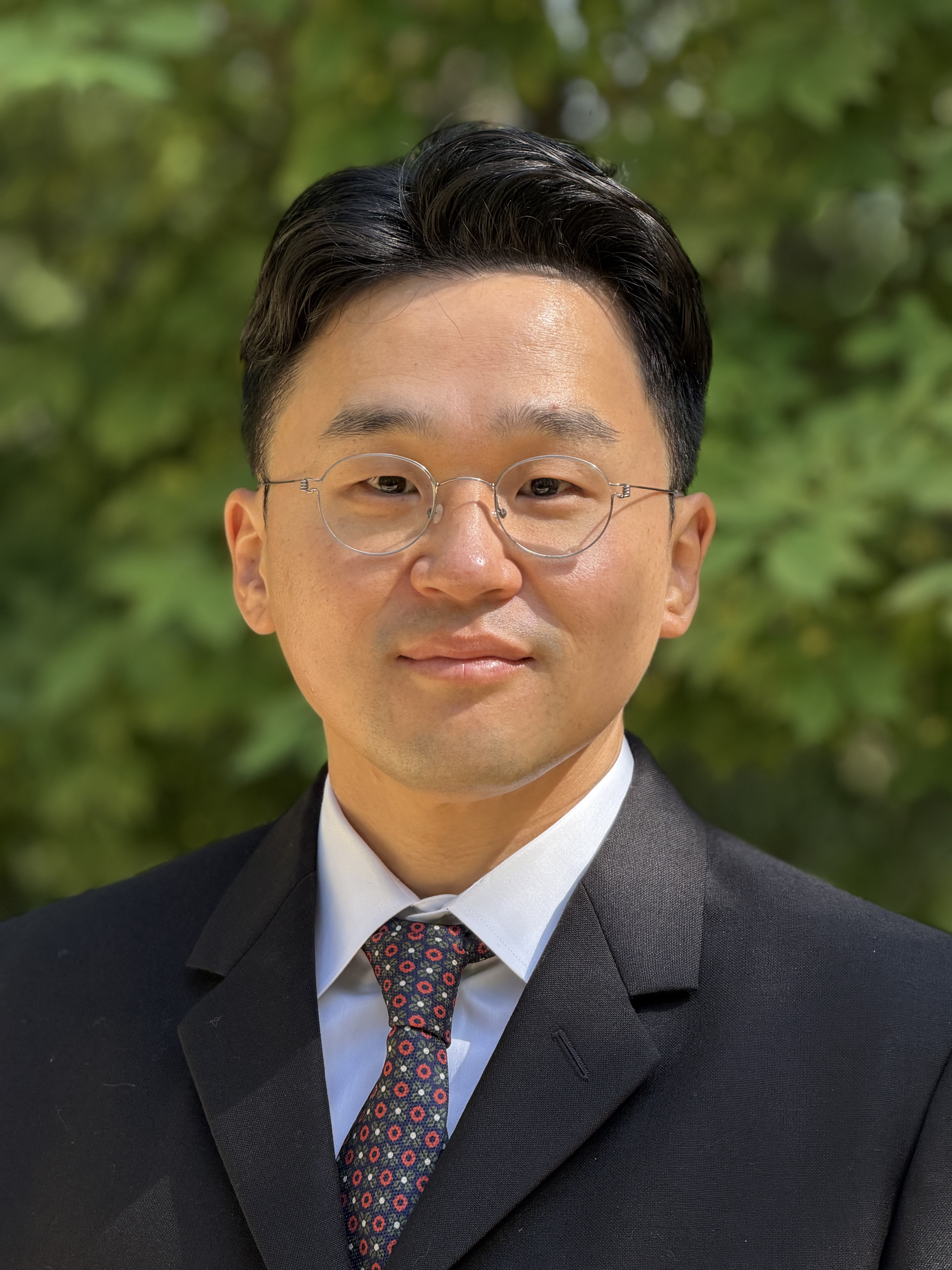
I am a Postdoctoral Fellow in Economic Development Policy in the Department of International Development, London School of Economics. I study how infrastructure and institutions shape industrial development and structural transformation, with a focus on South Korea's high-growth era and additional research on India.
Much of this agenda is anchored in Project MIRACLE, a multi-year effort to build the first subnational economic panel for South Korea's developmental period, 1960–1989. The project digitises roughly two million pages of municipal statistical yearbooks that have never been systematically compiled, and will be released as a public resource. Visit project site →
Working papers
Presentations: LSE ID, GPRL-IPA Researcher Gathering (Northwestern), ICRIER (New Delhi), SNU.
Funding: LSE RIIF.
Temporary demand can induce durable organizational upgrading by bringing forward investments that remain productive after the opportunity expires. The Year 2000 (Y2K) problem created a large but finite export opportunity for Indian software firms with legacy-system expertise. Because remediation demand collapsed at the January 1, 2000 deadline, post-deadline divergence cannot reflect continuing remediation orders. I digitize seven industry directories (1992–2003) and compare incumbents based on whether their 1995 technology stacks matched remediation requirements. Legacy-matched firms' employment differential is indistinguishable from zero during remediation but reaches 0.425 log points (53%) in 2001–03. They also exhibit a durable widening in reported process and quality-management certifications, whereas client counts and foreign-market reach show no comparably robust change. An investment-timing model rationalizes these patterns, showing that a temporary premium can accelerate investment in a general organizational capability without itself covering the sunk cost. Organizational upgrading can thus begin with expertise the frontier has left behind, rather than only with technology imported from it.
Selected presentations: World Congress of the Econometric Society, Columbia Development Seminar, Development Rookiefest (Northwestern), Asian Economic Development Conference, KDI, LSE ID, SNU.
Funding: Columbia PER, Columbia CDEP.
Infrastructure investments generate widely varying returns across similar communities. This paper argues the heterogeneity is structural: the same infrastructure shock leads communities to adopt fundamentally different development strategies depending on their social institutions. I study the 1973 Namhae Bridge in rural South Korea using village-level panel data spanning all villages in Namhae County. The bridge made rice modernization profitable, but capturing those gains required feeder roads. Road construction demanded permanent land donations from every landholder along the route, a classic anti-commons problem that had been latent when transport costs were prohibitive. Cohesive villages—those dominated by a single patrilineal clan—assembled the land, built roads, and mechanized rice production. Fractionalized villages pivoted to labor-absorbing cash crops that required no shared infrastructure. Both paths raised household income, but through different factor-intensity channels, demonstrating that infrastructure and social organization are institutional complements that determine not just how much communities gain from market access, but how they transform.
Does building more schools improve the quality of education? I study this question using India's Rashtriya Madhyamik Shiksha Abhiyan (RMSA), a national programme that constructed over ten thousand secondary schools between 2009 and 2016. Combining administrative data on the near-universe of Indian secondary schools with variation in the timing and location of new construction, I find that new schools increase aggregate enrolment but do not improve learning outcomes. While the absolute number of students taking and passing the nationally administered board exam rises mechanically, pass rates in existing schools do not improve — and may decline. The enrolment gains are driven primarily by public schools, while new private schools generate larger substitution effects, drawing students away from existing schools without expanding overall access. These results suggest that school construction alone is insufficient to raise educational quality, and that expanding access without complementary investments in teaching and resources may dilute rather than strengthen the system.
Work in progress
Decomposing a Miracle: A Subnational Economic Database for South Korea, 1960–1989
with Changkeun Lee and Hyunjoo Yang
Funding: LSE Seed Research Fund (£20K). Additional funding: STEG LRG (pending), Korean Studies Infrastructure Grant (pending), ESRC New Investigator Grant (pending).
We construct the first comprehensive subnational economic database covering South Korea's high-growth period (1960–1989). The project integrates three complementary data streams: (1) approximately two million pages of municipal statistical yearbooks — published annually by every county government but never systematically compiled — digitised using a custom AI-OCR pipeline for mixed Hangul/Hanja archival tables and harmonised into a township-year panel of ~3,500 units covering demographics, agriculture, industry, infrastructure, public finance, and education; (2) topographic maps and aerial photographs, linked to the panel on a 1km×1km standardised grid that resolves the boundary changes which have made consistent spatial analysis of this period impossible; and (3) oral history and local encyclopedia materials, processed via LLM-based text analysis to integrate qualitative accounts with the quantitative record. The resulting database will be released as a public resource with full documentation, an interactive data explorer, and replication code, with the goal of lowering the barriers to empirical research on one of modern history's most important development episodes.
Forests as Economic Infrastructure: Can Environmental Restoration Accelerate Industrialisation?
with Hyunjoo Yang
Funding: STEG SRG (£25K).
Environmental degradation is often viewed as an inevitable cost of early industrialisation. This paper challenges that assumption by examining how South Korea restored 2.8 million hectares of degraded forests while growing GDP per capita 20-fold between 1962 and 1987. We hypothesise that reforestation created complementary infrastructure that amplified returns to other investments through three channels: disaster mitigation that enabled adoption of higher-risk, higher-return technologies; watershed stabilisation that increased agricultural productivity; and reduced fuelwood collection burdens that improved school attendance. Using quasi-random variation in reforestation timing across townships driven by bureaucratic constraints in the availability of forestry-trained personnel, we provide causal evidence that environmental restoration can accelerate rather than constrain structural transformation.
Data
with Changkeun Lee and Hyunjoo Yang
The first consistent township-year economic panel for South Korea's developmental period (1960–1989), covering ~3,500 townships across 30 annual panels and 6 data domains. Pilot data release late 2026. Visit project site →
Subnational data for South Korea's high-growth period barely exists. Municipal statistical yearbooks were published annually by every county government, but surviving copies are fragmented across provincial archives, recorded in mixed Hangul and classical Chinese scripts, and scrambled by two major boundary reorganisations (1963, 1973) and dozens of smaller changes. We digitise approximately two million pages of these archival tables using a custom AI-OCR pipeline fine-tuned for mixed Hangul/Hanja scripts — documents that conventional OCR cannot process. The pipeline combines context-aware layout parsing, structured output extraction, and row-level cross-validation. We then harmonise variable definitions across editions and municipalities and assign time-consistent geographic identifiers (
miracle_id) that track every township through the boundary changes, allowing researchers to follow the same unit across three decades.The yearbooks form the backbone, covering demographics, agriculture, industry, infrastructure, public finance, and education. Additional archival layers extend the panel into domains the yearbooks do not reach: Korea Forest Service spatial archives (from 1910), the 1972 New Village Survey (새마을총람, ~35,000 villages), foreign loan records, and expressway construction logs. The data infrastructure is designed to generalise to other growth miracle economies with comparable subnational statistical traditions, including Taiwan and post-war Japan. Pilot data release in late 2026 covers the Gyeongbu Expressway corridor (~400 townships) with Core Keys, Demographics, and Agriculture modules. A diagnostic framework under development with KDI will use the historical relationship between institutional endowments and programme returns to support applied policy assessment.
Teaching
Selected evaluations: [LSE] [Columbia]
LSE, Department of International Development
Recipient, LSE Class Teacher Award (2024, 2025, 2026)
- Econometrics for Development Policy (MSc) (2023–26)
- Government Policy Analysis (MSc) (2023–25)
- Dissertation Advising / Research Design for Dissertations (MSc) (2023–26)
Columbia University, Department of Economics, Teaching Assistant
- International Trade for undergraduate and Masters students (2021)
- Industrial Organization for undergraduate and Masters students (2020–21)
- Principles of Economics, Head TA, for undergraduate students (2019–20)
- Game Theory for undergraduate and Masters students (2018–19)
The department faced a long-standing coordination problem in allocating over 400 student dissertations to 30+ supervisors across a multi-disciplinary faculty. I built an AI-based tool that encodes faculty research profiles and student dissertation proposals into a shared embedding space to rank matches. dv410.bookangseol.com →
An interactive repository of research on growth miracles, designed for students to engage with the literature. They can add papers, trace connections across debates, and build a shared map of the field. growth-miracles.bookangseol.com →
© BooKang Seol 2026