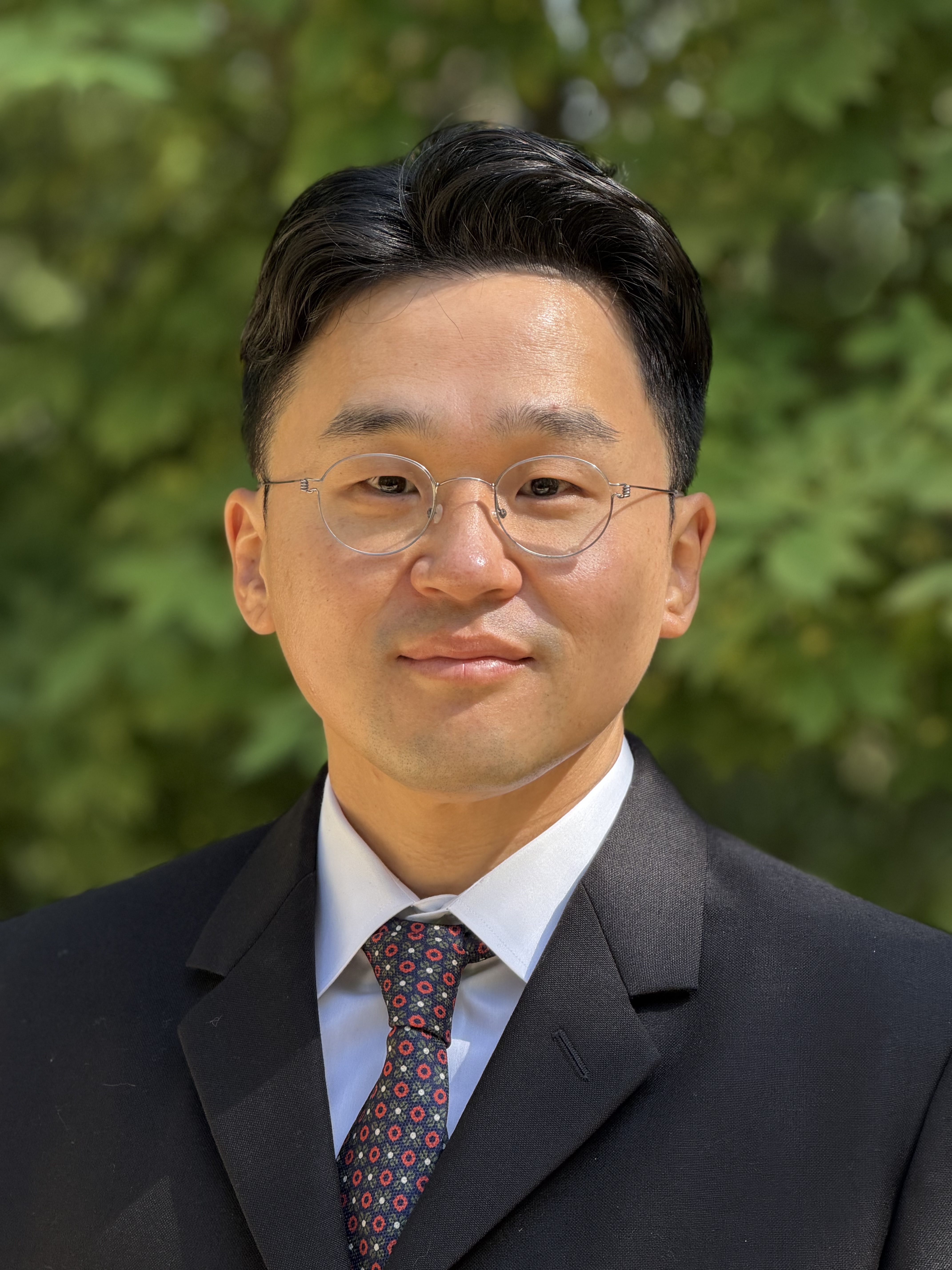
I am a Postdoctoral Fellow in the Department of International Development at the London School of Economics. I work in development economics, with a focus on firms, infrastructure, and structural transformation. I received my PhD in Economics from Columbia University. I am on the 2026–27 academic job market.
Much of my research agenda is anchored in Project MIRACLE, a multi-year effort to build a subnational economic panel for South Korea's developmental period, 1960–1985. The project digitises roughly two million pages of municipal statistical yearbooks that have never been systematically compiled, and will be released as a public resource. Visit project site →
Working papers
Selected presentations: European Winter Meeting of the Econometric Society (2026), GPRL-IPA Researcher Gathering (Northwestern), ICRIER.
Shifts in technology and trade periodically open brief windows for firms in developing countries to serve global markets. Turning these opportunities into lasting growth requires organizational capabilities to coordinate work and assure quality, yet high sunk costs make building them unprofitable at small scale. Can temporary demand for existing skills induce investment in broader capabilities? I study India's software industry around the Year 2000 (Y2K) problem, whose fixed deadline created a short-lived export boom in routine code repairs. Using newly digitized firm directories (1992–2003), I compare incumbents with and without prior expertise in the legacy systems needing repair. Exposed firms become 32 percentage points more likely to obtain certifications codifying general software-management processes. Their relative employment rises and keeps growing after Y2K demand collapses, reaching 53 percent. An investment-timing model shows that because general capabilities pay off more at scale and remain useful beyond the initial task, the extra return during the boom can trigger adoption without covering the full sunk cost. Temporary demand for work far from the technological frontier can thus lay the organizational foundation for lasting firm growth.
Selected presentations: World Congress of the Econometric Society, Columbia Development Seminar, Development Rookiefest.
Infrastructure investments generate widely varying returns across similar communities. This paper argues the heterogeneity is structural: the same infrastructure shock leads communities to adopt fundamentally different development strategies depending on their social institutions. I study the 1973 Namhae Bridge in rural South Korea using village-level panel data spanning all villages in Namhae County. The bridge made rice modernization profitable, but capturing those gains required feeder roads. Road construction demanded permanent land donations from every landholder along the route, a classic anti-commons problem that had been latent when transport costs were prohibitive. Cohesive villages—those dominated by a single patrilineal clan—assembled the land, built roads, and mechanized rice production. Fractionalized villages pivoted to labor-absorbing cash crops that required no shared infrastructure. Both paths raised household income, but through different factor-intensity channels, demonstrating that infrastructure and social organization are institutional complements that determine not just how much communities gain from market access, but how they transform.
Work in progress
Decomposing a Miracle: Township-Level Evidence on South Korea's Transformation
Funding: LSE Seed Research Fund (£20K). Under review: ESRC New Investigator Grant (£350K).
South Korea's transformation is well documented in national aggregates, but much less is known about where and when development occurred within the country. This paper introduces Project MIRACLE, an annual township-level panel built from Korean local statistical yearbooks covering 1960–1985. I describe how mixed Hangul–Hanja tables are digitised, mapped to consistent variables, linked across changing administrative boundaries, and validated against internal totals and independent aggregates. I then use the panel to ask how geographically broad Korea's development was. The paper connects two debates. One concerns whether public services such as roads, electricity and schools were concentrated in favoured regions, as often claimed for the southeast under Park Chung Hee, or spread across the country. The other concerns whether manufacturing-centred growth came at the expense of agriculture and local commerce, or whether farm yields, mechanisation and commercial activity also rose in places that manufacturing did not reach. I date the arrival of these services across townships, measure where manufacturing and other productive activity concentrated, and track where population grew and declined. I also show how much of this variation county and provincial averages hide.
Push, Pull, and Access: Agricultural Modernisation and Productive Reallocation in Korea
Forests as Economic Infrastructure: Can Environmental Restoration Accelerate Industrialisation?
Funding: STEG SRG (£25K).
More Schools, Better Schools? Evidence from India's Secondary Education Expansion
This paper examines how expanding educational access affects the quality of existing schools by studying India's Rashtriya Madhyamik Shiksha Abhiyan (RMSA), a national secondary school construction program launched in 2009. Applying a difference-in-differences strategy to administrative data covering the near-universe of Indian secondary schools, I find that new school construction increases total village enrollment by 3.2%, driven by new public schools. Enrollment in pre-existing schools falls by 7.8% as students sort into the new schools. New schools mechanically increase the absolute number of students taking and passing the Grade 10 and Grade 12 board exams, but they do not improve pass rates in pre-existing schools. Expanding physical access alone does not induce competition strong enough to improve educational quality.
Data infrastructure
A township-year economic panel for South Korea's developmental period, 1960–1985, built from municipal statistical yearbooks and linked across changing administrative boundaries. It is the first phase of a longer-term effort to reconstruct the local economic histories of growth miracles. Pilot data release late 2026. Visit project site →
Building MIRACLE involves two main challenges. The first is finding the yearbooks. No central archive holds them all, and most surviving volumes, especially the earlier ones, are scattered across county offices. I address this with support from Seoul National University, KDI School, and Sogang University. I also work directly with county offices, digitising volumes on site with high-speed scanners. The second is turning scanned pages into usable data. Rather than training a custom reader for these mixed Hangul–Hanja tables, MIRACLE has three pretrained open document-AI models read every page independently. Where they disagree, the table's own printed totals decide, and a frontier model reviews any remaining conflicts without supplying numbers of its own. Research assistants check flagged cells and a random audit sample, so each release comes with a measured error rate. A time-consistent identifier (
miracle_id) follows each township through boundary changes, including the major reorganisations of 1963 and 1973.The yearbooks cover population, agriculture, industry, infrastructure, public finance and education. The pilot release, planned for late 2026, covers about 400 townships along the Gyeongbu Expressway corridor with core identifiers, population and agriculture, and is available to researchers on request. Later releases will extend coverage nationwide, and the full panel will be released as a public resource. Future phases would link the same townships to colonial-era records and add census and firm-level records where access allows. Because the pipeline needs only a few hundred hand-keyed pages to set up on a new collection, the same approach can extend to other economies with comparable archives, such as Taiwan and Singapore.
Teaching
Selected evaluations: [LSE] [Columbia]
LSE, Department of International Development
Recipient, LSE Class Teacher Award (2024, 2025, 2026)
- Econometrics for Development Policy (MSc) (2023–26)
- Government Policy Analysis (MSc) (2023–25)
- Dissertation Advising / Research Design for Dissertations (MSc) (2023–26)
Columbia University, Department of Economics, Teaching Assistant
- International Trade for undergraduate and Masters students (2021)
- Industrial Organization for undergraduate and Masters students (2020–21)
- Principles of Economics, Head TA, for undergraduate students (2019–20)
- Game Theory for undergraduate and Masters students (2018–19)
The department faced a long-standing coordination problem in allocating over 400 student dissertations to 30+ supervisors across a multi-disciplinary faculty. I built an AI-based tool that encodes faculty research profiles and student dissertation proposals into a shared embedding space to rank matches. dv410.bookangseol.com →
An interactive repository of research on growth miracles, designed for students to engage with the literature. They can add papers, trace connections across debates, and build a shared map of the field. growth-miracles.bookangseol.com →
© BooKang Seol 2026